From Cebu to Paris, we’ve got you covered
Picked up in Jollibee in Ayala Mall in Cebu in December 2025, we’re bringing the jollijoy to you in Paris ! Multiple items available, new and unopened.
Find the Jollibubu on Vinted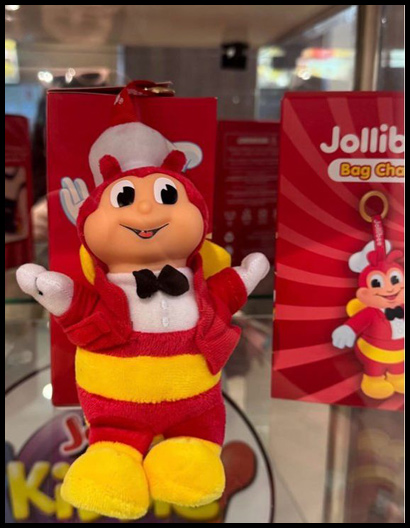
In late 2025, a palm‑sized plastic bee quietly became the latest proof that no one does fast‑food nostalgia quite like Jollibee. The chain’s limited‑edition bag charm, modeled after its crimson‑and‑yellow mascot, arrived in Philippine stores as a bundled premium, then promptly escaped the confines of the archipelago via TikTok reels, resellers, and balikbayan luggage. What might have been a throwaway trinket instead turned into a small object of desire—part comfort food, part collectible economy.
Release dates and scarcity
The Jollibee bag charm surfaced first as part of a mid‑year 2025 collectibles push, paired in content and displays with a special Funko Pop “Pinoy and Proud” figure tied to Independence Day promotions. By November 22, 2025, it was formalized into a nationwide promo item, a deliberate sweet spot between impulse buy and entry‑level luxury accessory. The promotion ran through the end of December, long enough for queues to form—but not long enough to satisfy demand, a familiar playbook in the age of engineered scarcity
By late December, YouTube unboxings were already describing the piece as “sold out,” the charm recast from fast‑food freebie into trophy. Within weeks, listings on Shopee and other marketplaces were advertising “limited edition” Jollibee bag charms. For fans, the second release window arrived almost exactly a year later: mall posts in January 2026 announced another “limited‑edition JB Bag Charm”, this time framed overtly as a timed drop—January 9 to 31, “while supplies last.” A charm that began as a side promotion had, by then, acquired the cadence of a seasonal drop.
Finding the Jollibubu, at home and abroad
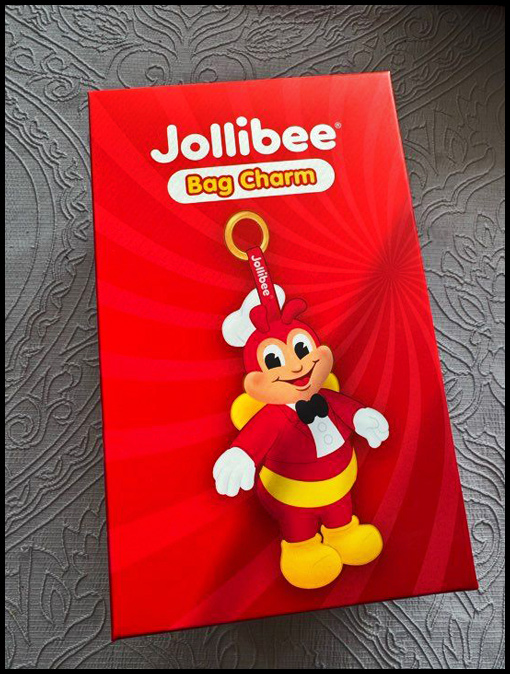
Availability has thus become a question of timing and geography. In the Philippines, the charm remains nominally accessible: it appears in waves, locked to specific promo periods, and is tethered to bundled meals that almost guarantee families will walk out with more food than keychains. Outside the country, the bag charm functions less as merch than as portable identity. Filipino and Asian‑American influencers in the United States and elsewhere show it clipped to totes and backpacks, often framed as a stand‑in for the chain itself in places still underserved by Jollibee’s global rollout. On social platforms, some fans affectionately dub it “JABUBU” or “JolliBubu,” signaling a shared understanding: this is not just a mascot keychain, but a localized riff on a Chinese cult character.
Chinese pop toys meet Pinoy fast food
That nickname is no accident. The bag charm’s squat silhouette, oversized head, and impish grin are uncannily close to Labubu, a gremlin‑like figure from Hong Kong illustrator Kasing Lung, popularized by Chinese designer‑toy powerhouse POP MART. In the last few years, POP MART has turned characters like Labubu into a near‑ubiquitous presence in Asian malls, vending machines, and suitcase collections, effectively exporting a Chinese‑led “fashion toy” aesthetic that blurs art object and accessory. The Jollibee charm borrows that language—chunky proportions, soft‑edged menace turned cute—and dresses it in a bee costume that doubles as national branding.
At that intersection, the object becomes a tiny, jangling compromise between cultures. From China’s side comes the logic of the blind box, the drop, the character as speculative asset; from the Philippines’ side comes the warmth of a fast‑food brand whose menu—fried chicken, sweet spaghetti, peach‑mango pie—is itself a remix of American templates with local taste. To hook a Labubu‑accustomed generation on Jollibee is to speak in toys, not just television spots. The bag charm, dangling from canvas totes in Manila, Hong Kong, or Los Angeles, is proof that Chinese pop‑toy aesthetics and Pinoy food nostalgia now share the same key ring.